Showing posts with label tree sparrows. Show all posts

Sunday, 9 August 2020

A TYPICALLY QUIET AUGUST MADE EXCITED BY A NEW NEST DISCOVERY

With much of the wildlife still seemingly hiding away, it’s been left to a few of the stars of the garden this year to make the headlines, and also one big surprise.

First, the big surprise and it was the discovery of new nest in the garden just last week; a nest from a bird I’ve seen around the garden and lane, but never thought it would nest near the house.

The bird in question is a goldfinch, which has nested near the top of a small bush/tree, about eight feet from the ground and in a fairly precarious place.

I’d been hearing a lot of calling from the goldfinches around the garden in recent weeks, particularly in the last week or so, and looking at the state of the nest I suspect the young had recently fledged.

It’s brilliant that a small garden can provide the right environment for birds to nest, so now the goldfinch can be added to the list of nesting birds in the garden, alongside blue tits, great tits, robins, house sparrows, tree sparrows and blackbirds.

The robin family now appears to be in dispute with one another, as one of the youngsters is seemingly trying to win our garden as part of its territory over one of its parents – I suspect the male.

They have both been seen often in the garden in recent weeks and it would seem it’s quite a good place to have.

Who will triumph in the end? I don’t know but both are quite feisty and friendly in similar doses – friendly to the humans who live here.

Another now regular visitor is the hedgehog, who can be seen, and often heard, most nights.

The hedgehog is leaving regular deposits of poo around the garden too, but is also getting around the neighbours’ houses and is also being provided some food by them.

It looks like the hedgehog has found somewhere it likes, and if collectively we continue to provide the right environment for it, then it’ll hopefully stay.

One of the most important things is allowing free and easy access to all the gardens and making sure the cats and dogs stay away from it.

I think most of the neighbours are excited to see a hedgehog, so hopefully it’ll stick around.

Tuesday, 31 January 2017

THE BIG GARDEN BIRDWATCH

Once again the garden was under surveillance for an hour over the weekend as three pairs of eyes scanned for bird life.

With two feeders placed on a recently trimmed tree, an upstairs window gave the perfect vantage point to spot incoming birds.

As two children under the age of seven were involved, it proved slightly more ‘interesting’ than just one adult, but it was great to see the young eyes getting excited about seeing a bird and then being able to tell what it was.

One person was in charge of the scoring chart, and the other two had binoculars to confirm the visitors and number.

In line with what is known about bird visitors to the garden from the last nine years of watching, the results weren’t too unsurprising.

House sparrows came out top of the pile, closely followed by great tits and blackbirds.

Blue tits were next on the list, followed by magpies, long tailed tits, dunnocks, woodpigeons, goldfinches and tree sparrows.

One thing that wasn’t included in the birdwatch survey was a tawny owl, and no sooner had I mentioned about not hearing or seeing any for a while, than one was heard calling late one evening last week.

It was hunting over one particular nearby field, but hasn’t been heard of since during the evening and was gone after a short time.

The nest box cameras haven’t seen much action, but one of them (the older one) is seemingly unable to record at night now. The next thing on the list will be a new camera, but I think the birds are not using the nest boxes for roosting because of the relatively warm winter, so far.

Time will tell, but I hope that both cameras will be able to see some action this year, particularly as I’ve changed the opening slot to the newest camera box.

Wednesday, 13 January 2016

WILL THE WINTER VISITORS NOW FLOCK IN TO THE GARDEN?

Now that winter has started to show it can bring cold weather, there is an increased hope that a few traditional birds will visit the garden feeders and berries still present on the pyracantha bush

While the garden hasn’t seen any frost or snow, the general temperature has been noticeably dropping in the last couple of days and it won’t be long before a carpet of whiteness will layer the land.

It will hopefully bring more birds, and perhaps mammals, to the food on offer and with it potential closer encounters with the local predators – kestrel, sparrowhawk and even the peregrine falcons that live nearby.

Due to unforeseen circumstances the new nest box was unable to be erected, but it will be in the next couple of weeks.

And because of the increased roof space it’ll be able to better accommodate the second camera that has been putting off nesting birds in the triple sparrow nest box.

It is definitely putting off nesting birds because the other two boxes have been used in the two summers it’s been erected.

I knew one was used in the summer last year, but while cleaning them in the last couple of days I found the two without a camera had been used (see below).


Sadly the bird box that has been used by house sparrows, blue tits, great tits and tree sparrows, had five dead sparrows in it (see below).

The positive news was that it was the sixth brood from last summer so between 20 and 30 new house sparrows were brought in to the local population from that nest box.

In the eight years since it was put up there have been an estimated 150+ birds fledging from that nest box, something which is not bad for a small(ish) rural garden.

Sunday, 3 January 2016

BIRDS ARE NOW USING THE GARDEN FEEDERS

There has been a rise in the number of small birds visiting the garden and this must be down to a combination of cooler weather and the decreasing amount of natural food resources left in the countryside.

Of course it’s still very wet, but colder overnight temperatures mean the need to conserve energy by locating a good food source and staying close to it.

Unfortunately the weather isn’t cold enough to see some of the more infrequent visitors to the garden – so no long tailed tits, redwing, fieldfare etc.

Instead it’s the more year round visitors in house sparrows, tree sparrows, blue tits, great tits, blackbirds, robins and dunnocks.

It’s great to see these birds in the garden and I hope some will once again utilise the nest boxes in the garden or even the natural resources.

I’d just finished writing this post when a family of long tailed tits flew into the garden, spending about 20 minutes feeding and chattering. A lovely winter (or any other time) sight in the garden.

One of the jobs during winter is to clean out the nest boxes to make them a lot more hygienic for the birds – and provide them with something they can build something in rather than have a ready built nest from last year which is likely to contact bugs and even parasites.

It also gives a chance to look at how well the nests have been made and see just how many have been occupied.

In 2014 it was the tree and house sparrows that dominated the boxes, but this year I’m hoping to see at least one pair of blue tits or great tits nesting in the garden nest boxes.

The biggest clue will be when the winter overnight roosting takes place, which will need the weather to get a bit colder.

Until then the feeders will need to be topped up and wait for winter to bring its worst. I hope that’s soon so the midges and little flies that are plaguing the garden will be put out of action.

Sunday, 25 October 2015

A SLOW START TO AUTUMN


It’s definitely autumn, but someone might remind the season itself as the usually autumnal weather isn’t really taking affect.

The worms in the garden are finding the leaves blown to the ground, on the odd windy day, quite useful, but we’re nearly in November and the traditional conditions of strong winds and heavy rain have stayed away.

It does mean that while the summer visitors (swifts, swallows and house martins etc.) have long gone, the autumnal migrants – both to the UK and the garden – are not exactly here in big numbers.

Perhaps the new series of BBC’s Autumnwatch will herald the arrival of normal autumnal weather.

The garden is looking fairly bare in terms of bird numbers and variety; even the blackbirds, robins and tits (great and blue) are infrequently seen.

The house and tree sparrows are hardly in the garden at all, which has all meant the bird feeders do not have to be topped up very often.

Snow and ice are ‘predicted’ by some weather forecasters, but this seems to be the case every year.

If it does come true (that’s a very big IF) then the garden and the feeders could see the odd unusual visitor.

Three birds are on the list to be seen this winter – long tailed tit, redwing and fieldfare. The former usually visits in flocks every winter, but the other two have never been seen in the garden.

They have been spotted nearby, so this year there will be some keen eyes focused on the red berries and fat snacks, just in case.

Finally, Spike the hedgehog has still not been spotted, although it’s too early to put up ‘dead or alive’ posters.

Saturday, 3 October 2015

SUNSHINE IS BACK, BUT WITH IT COOL MISTY MORNINGS

If only this sunny and settled weather had happened a few weeks ago we’d have all been basking in some late summer warmth, instead we’re left with cool and misty mornings, warm(ish) days and cool nights.

The sort in Indian summer has meant visitors to the garden have been rare this week, as the small birds seem to be finding plenty of food out in the countryside.

I have seen small flocks of house sparrows, the odd tree sparrow and some great tits and blue tits, but not much else.

They are taking some of the food I’m leaving out, but not much.

The explosion of crane flies has seemingly come to an end, as I’ve not seen any for quite a few days.

But what has exploded has been the number of very large house spiders shooting across the floor, seemingly chasing each other.

I know this happens most years, but this year there seems to be a huge amount of them and they all seem very amorous!

The cooler nights has obviously indicated to them that the best chance of creating the next generation is to congregate in the warmth of our house.

When one landed on my shoulder after jumping 15ft from the ceiling, it was the last straw and that night saw ‘evictions’ of these spiders reach double figures.

I had hoped the masses of bright red berries on the pyracantha would attract fieldfares and redwing, but no such luck so far, and I expect that my wait might not be rewarded this year.

Perhaps next year when the bush has grown in size again it’ll help provide a bigger attraction for passing migrants.

Sunday, 10 May 2015

THE FIRST CHICKS HAVE ARRIVED

I knew there was a reason for the house sparrows in the blue tit nest box putting nesting material over the camera – they had eggs.

I say had, because they have now hatched and I can clearly hear the chicks when I’m outside in the garden.

I’m guessing there’s at least five, having listened to the chirping for a period of time and recognising separate chirps.

Obviously I’ll not open the nest box until the chicks have fledged as I’m sure there’ll be another brood, but for now this is the view I'm getting.
 

In the triple sparrow nest box there are also chicks that I can hear. I suspect the sparrow parents are continuing on with the contest from 2014 when a pair of house sparrows and tree sparrows tried to produce the most chicks – last year was a draw.

Again the nest box camera has been evaded by the house sparrows, as they have nested in one (or maybe both) of the other nest boxes.

Does anyone else have so many house sparrows in such a small space using nest boxes?

The swallows are now in a large group and have been seen frequently ‘hanging out’ on some of the nearby telegraph wires.

The group has totalled 10-15 over the last few days, but I think only one pair is nesting in the horse stables behind the house.

The old pond area, which is now a wild rockery, is literally blooming. Indeed there have been many insects taking refuge and feeding in there.
 

Today I saw a beautiful small(ish) butterfly, which I think was this one.

 
It was joined by a large bumblebee, dancing in the air around the flowers and grasses.

The weather for the next few days is due to be delivering early summer temperatures, so I’m hoping to see more butterflies and bumblebees in the garden.

Tuesday, 3 February 2015

WINTER COLD POSTPONES PREPARATIONS FOR SPRING

This year we can’t say we haven’t had some proper winter weather. The snow, ice and bitterly cold northerly winds have caused wildlife in the garden to postpone plans for spring.

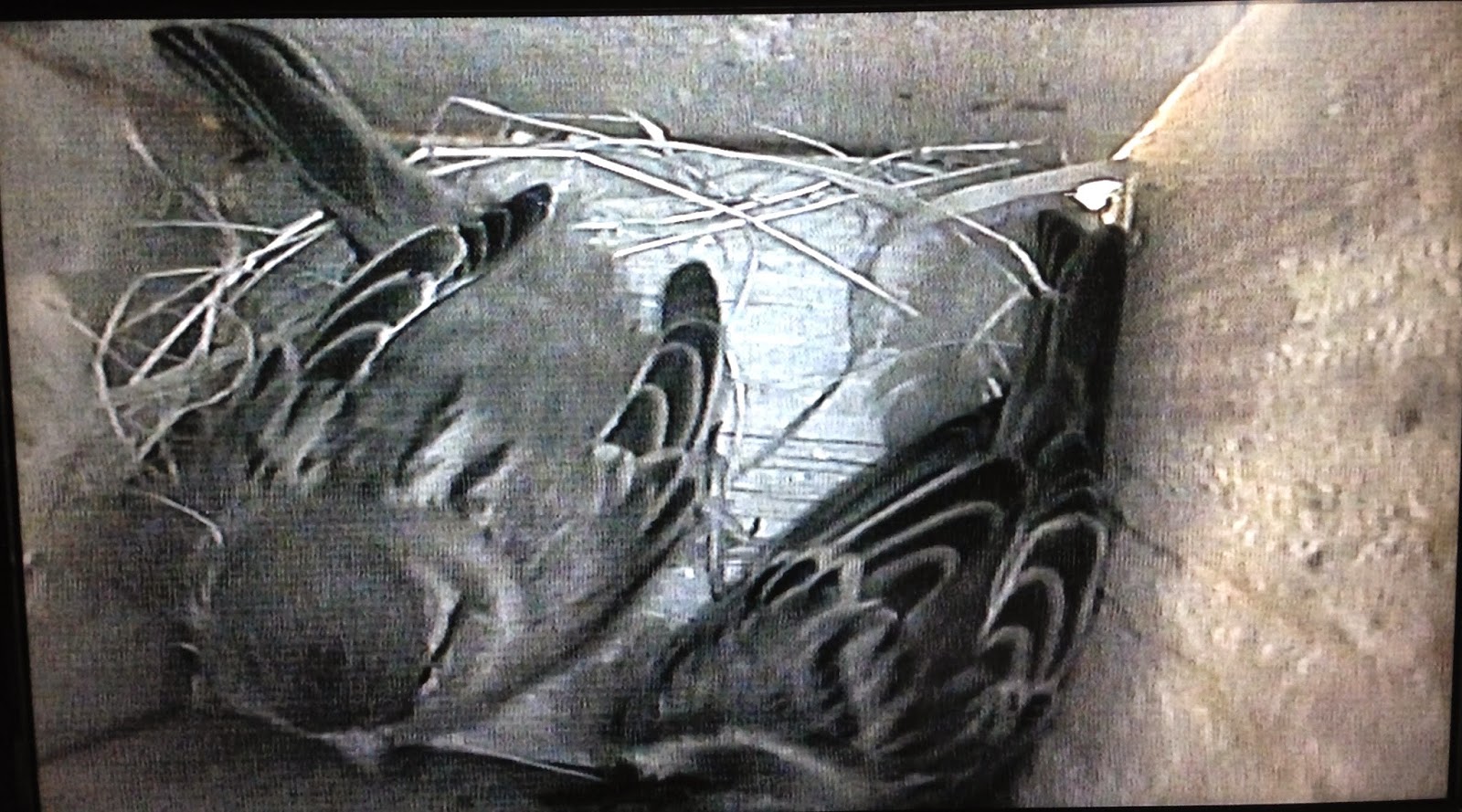
The nest building of the house sparrows has stopped (see first three images below), although overnight roosting has continued with the female bird (see final image below).


A pair of tree sparrows are still showing great interest in the sparrow nest box ‘complex’, but not in the section with a camera in.

In the last couple of days I have seen the pair of robins, whose territory includes the garden, flirting with each other and driving off intruders.

A pair of great tits have also been showing signs of flirtation but, like the robins, it doesn’t last long as the search for food to keep them alive during the harsh overnight frosts takes their attention.

Recently a grey squirrel has been frequenting the garden. This is unusual because although they seem to live about ½ a mile away, visits to the garden have been very rare.

The prolonged cold weather must be driving them further in search of food.

With the ground rock hard, the single winter rose and snowdrop are unlikely to be joined by any of the numerous bulbs that had pierced the surface of the soil a couple of weeks ago.

The branches of the fruit tree in the garden are covered in the first shoots of spring buds, but I don’t expect there to be any further movement in the next week or so.

That’s because the forecast appears to show this cold weather staying for a while, so postponing the recent eagerness of the wildlife in and around the garden to prepare for spring.

Sunday, 25 January 2015

THE NESTBOX CAMERA IS BACK - WITH EXCITING NEWS

The cold weather looks like abating after this weekend, with milder conditions set to take hold.

It’s good news for the wildlife that has survived the cold snap, but I’m sure there’ll be a few more before winter it out.

Before I get on to the big news from my garden, the signs of spring are certainly showing with numerous bulbs showing.

I’ll use images to showcase the change in one area of the garden’s flowerbed, to see which bulbs come up first and how quickly they do so.

OK, the nestbox camera that was cut off just as the first nest was being built last year, IS BACK.

I fitted a new cable this week and already there has been some action. When I inspected the nestbox last week it had bird droppings in it, so I knew some roosting had been occurring.

When the camera went live a female house sparrow roosted in for the night and today, just two days after it went live again, it started nest building with a male house sparrow.


I also noticed that a pair of tree sparrows is now paying close attention to one of the three boxes in the sparrow nestbox, but nothing has gone into the one with the camera in it.

 
There appears to have been something occurring inside the nestbox during the winter, but I’m not confident that a nest will appear.

Perhaps we’ll have a nearly completed nest by next week, which will be much earlier than last year.

Finally, today I took part in the RSPB’s Big Garden Birdwatch. Nothing too unusual although the female great spotted woodpecker did put in an appearance.
 

Friday, 9 January 2015

HOW SUMMER CHANGED THE GARDEN

So here’s how the garden looked in the summer months of July and August.

The tree and house sparrows continued to fledge broods and the full effect of the summer sun in July and the rain in August can clearly be seen.

Next week I’ll look at October and November, with a seven week gap between the last one of August and first one in October – due to a stay in hospital.

In other news the female great spotted woodpecker has been seen feeding on the fat snack in the garden on most days, while a few female chaffinches have been seen around the garden.

On the lane there’s already been construction started on a number of nests, so I’ll mark where they are and monitor progress as the leaves return and bring camouflage.

Finally a number of bulbs are starting to sprout, so I’ll get some pics and bring news on here later this month.

July


August


Sunday, 4 January 2015

A RELFECTION OF CHANGES IN THE GARDEN DURING 2014

In August I started to share images of how the garden changed during the months of the year, but only got as far as March and April due to a sudden serious illness.

It’s probably a little late but here’s how the garden changed during May and June. You’ll see a significant change in May.

In June I trimmed the climbing plant as it was pulling at the guttering, but made sure that it didn't affect the birds nesting.

In these three months there were two broods hatched and fledged from the two nest boxes you can see.
 
The single one on the right had house sparrows in, while the nest box on the left had tree sparrows nesting in the segment on the left.
 
May 


June


Sunday, 14 December 2014

FIRST STORM OF THE WINTER, BUT NO SNOW

The first winter storm didn’t hit as hard as was predicted in the garden, though I know it was particularly vicious across Scotland.

Although it has been followed by colder weather, the predicted snow didn’t materialise for the wildlife around the house, though it is quite rare to see here.

Birds of prey have been seen with increased regularity in recent weeks, in the form of buzzards and a kestrel. The latter even landed on a neighbour’s window ledge while it scoured the gardens for a meal. It didn’t appear to be successful, but it shows how more birds are using gardens for a source of food.

Even the buzzards, I know there is more than one as I’ve seen two within sight of the garden at once, are flying low over the gardens almost daily. A few years ago one even landed in the garden!

The great spotted woodpecker has also been back a few times in the last week, while a couple of jays have also been spotted regularly and the long tailed tits are now using the garden as a ‘winter stop off’ for food. I know it’s cold and there’s a lack of food when they come into the garden

Obviously those three aren’t as regular as the daily visitors – blue tits, great tits, blackbirds, wrens, robins, dunnocks, house sparrows and tree sparrows.

I’ve seen goldfinches up and down the lane recently, but not yet in the garden.

With colder temperatures set to continue, despite a potential brief ‘warmer’ spell in midweek, I expect I’ll have to fill the bird feeders with increased frequency.

Snow anyone?

Tuesday, 2 December 2014

WINTER IS HERE

Winter has started to bite this week and my peanut feeder has been constantly surrounded by a large flock of house and tree sparrows, with the odd blue and great tit.

A male and female blackbird have been seen mopping up any scraps dropped on the floor, while the resident robin is also hanging around, trying to mimic the tits but hanging onto the feeders.

While all this is happening in the front garden, out the back, which is an outbuilding and track to the manor house, the resident robin is singing and continually standing on a particular branch of a small tree overlooking the residency.

I’m not sure if there’s a suitable nesting site nearby, but I’ll keep an eye out and see if I can spot any nest building in spring.

Meanwhile I’m occasionally seeing a wren around the rear robin’s residency. It’s not around for a long time, but flits in and out of little crevices picking up little bits of food.

The great spotted woodpecker is also back, taking a keen interest in the fat snacks. It’s a male and I’m wondering if it’s the same one that has been spotted regularly in the garden over the last couple of years.

So, as the winter chill continues I’ll be keeping an eye out for all the wildlife in the garden, to see who is struggling and who is making the most of my handouts.